
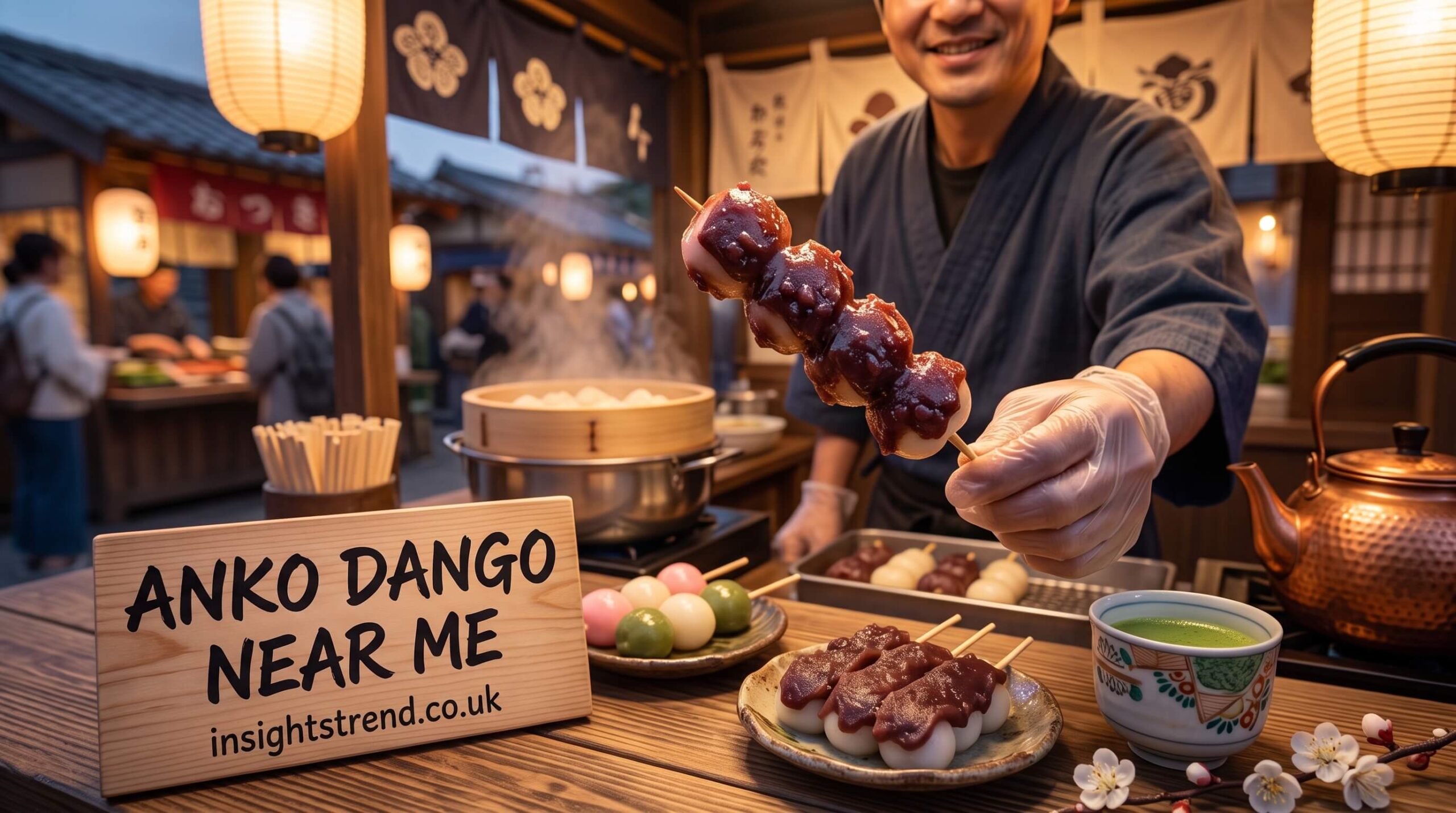
Searching for anko dango near me is a great way to discover one of Japan’s most comforting traditional sweets. Dango are soft, chewy rice-flour dumplings traditionally served on skewers, while anko is a sweet paste made from cooked azuki beans and sugar. The combination creates a simple dessert with a satisfying texture and gently sweet flavor.
Whether you are visiting a Japanese bakery, exploring a specialty dessert shop, or looking for an authentic Japanese restaurant nearby, knowing what to look for can make your search much easier.
What Is Anko Dango?
When people search for anko dango near me, they are usually looking for chewy Japanese rice dumplings topped or served with anko, the classic sweet red bean paste. Dango belongs to the wider world of wagashi, Japan’s traditional confectionery culture.
Unlike many Western desserts that focus on rich cream, chocolate, or pastry, anko dango emphasizes texture and balance. The dumplings are pleasantly chewy, while the azuki bean paste adds a smooth, earthy sweetness.
The Japan National Tourism Organization describes dango as rice-flour dumplings commonly served on bamboo skewers. Anko is one of the fundamental ingredients found throughout Japanese sweets.
How to Find Anko Dango Near Me

The easiest way to find anko dango near me is to search local Japanese dessert shops, wagashi stores, Japanese bakeries, and restaurants specializing in traditional sweets. Not every Japanese restaurant carries dango, so checking the current menu before visiting can save time.
Search terms such as “Japanese sweets near me,” “wagashi near me,” “red bean dango near me,” and “Japanese dessert shop near me” can reveal additional options when a direct search for anko dango near me produces limited results.
Dedicated wagashi shops can be particularly interesting because their menus may include several traditional sweets alongside dango. JNTO notes that wagashi can range from everyday sweets to highly seasonal creations inspired by nature and Japanese aesthetics.
What Makes Good Anko Dango?
When evaluating anko dango near me, pay attention to the texture of the dumplings. Fresh dango should have a soft, pleasantly chewy consistency rather than being extremely hard or dry.
The anko also makes a major difference. Some shops use smooth koshi-an, while others prefer chunky tsubu-an containing small pieces of azuki beans. Neither style is automatically better; the choice largely depends on personal preference.
Freshness is especially important with traditional Japanese sweets. A shop that prepares its dango regularly may offer a more enjoyable texture than one where the product has been sitting for an extended period.
Anko Dango vs Other Japanese Desserts

If you are searching for anko dango near me, you may encounter several similar Japanese desserts. Dango and mochi share a chewy texture, but they are not exactly the same thing.
Dango is generally made from rice flour and shaped into small dumplings, often served on skewers. Mochi, meanwhile, is traditionally made by pounding glutinous rice into a soft and stretchy dough. Both are important parts of Japanese confectionery culture.
You may also see anko-filled dorayaki, taiyaki, manju, or other wagashi. These are excellent alternatives if your local search does not produce an authentic dango option.
Best Places to Look for Anko Dango
A search for anko dango near me can lead to very different types of businesses. Japanese grocery stores sometimes carry packaged or chilled versions, while specialist wagashi shops may prepare traditional sweets more carefully.
Japanese cafés are another useful option, particularly those that serve matcha alongside traditional desserts. Pairing chewy dango with unsweetened green tea can create a balanced experience because the tea’s bitterness contrasts with the sweetness of the anko.
Local Japanese cultural festivals can also be worth checking. Dango is associated with Japanese festivals and outdoor food culture, making temporary food stalls another potential source.
Why Anko Dango Is Worth Trying
The appeal of anko dango near me goes beyond simply finding something sweet to eat. It offers a small introduction to Japanese food traditions, where texture, presentation, seasonality, and moderation are often important.
For someone new to Japanese desserts, anko dango can also be an approachable starting point. The ingredients are relatively simple, but the combination of chewy rice dumplings and sweet azuki paste provides a distinctive experience.

Tips Before Ordering Anko Dango
Before visiting a shop you found through an anko dango near me search, check whether dango is available that day. Traditional sweets can sometimes be seasonal or produced in limited quantities.
It is also useful to check whether the shop serves smooth or chunky anko and whether the dango is made fresh. If you have dietary restrictions or allergies, ask the shop about ingredients because recipes and preparation methods vary.
For additional background on Japanese traditional foods, the Japanese Ministry of Agriculture, Forestry and Fisheries provides educational information about Japanese food culture and regional confectionery.
FAQs About Anko Dango Near Me
What is anko dango?
Anko dango is a Japanese sweet made from chewy rice-flour dumplings served with sweet azuki red bean paste.
Where can I find anko dango near me?
Look at Japanese dessert shops, wagashi stores, Japanese cafés, specialty bakeries, and some Japanese grocery stores. Checking menus online before visiting is recommended.
Is anko dango the same as mochi?
No. Both are chewy Japanese rice-based sweets, but dango is generally made from rice flour, while traditional mochi is made by pounding glutinous rice.
Is anko sweet?
Yes. Anko is traditionally sweetened azuki bean paste, although its sweetness can vary between recipes and shops.
What should I drink with anko dango?
Unsweetened Japanese green tea or matcha is a popular pairing because its slightly bitter flavor balances the sweetness of the anko.
Final Thoughts on Anko Dango Near Me
Finding anko dango near me can turn a simple dessert search into an opportunity to explore authentic Japanese confectionery. The combination of chewy rice dumplings and sweet azuki bean paste is straightforward, distinctive, and deeply connected with Japan’s wagashi tradition.
Whether you discover it at a Japanese café, specialty sweets shop, bakery, grocery store, or cultural event, try it fresh when possible. If you enjoy the texture and flavor, exploring other wagashi such as dorayaki, taiyaki, manju, and mochi can be a natural next step.
