
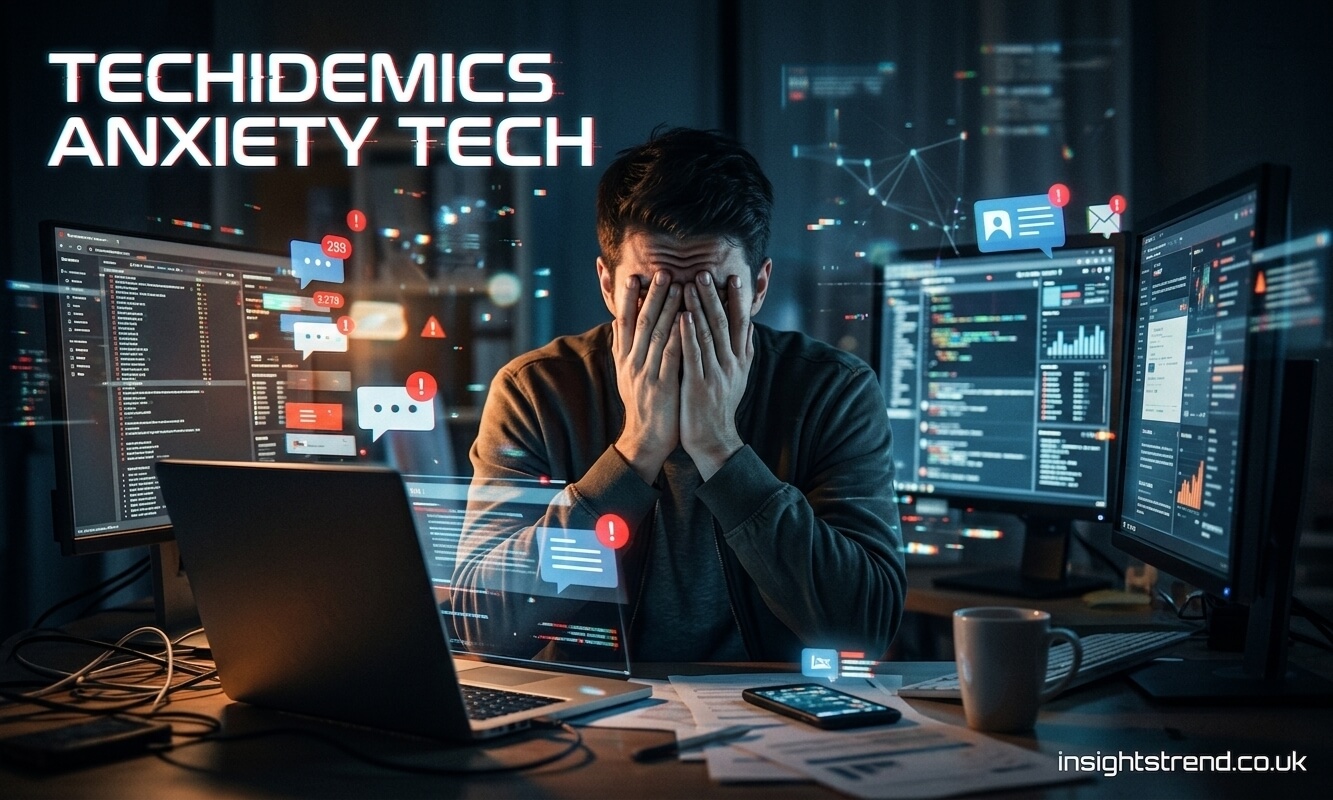
You know that low-level dread when another update drops, or when someone at work mentions a new AI tool that supposedly does half your job? That mix of overwhelm, irritation, and quiet worry about keeping up is what a lot of people mean when they talk about techidemics anxiety tech. It’s not an official diagnosis. It’s just a useful way to name the stress that builds from living inside rapid technological change.
Most people searching this aren’t looking for jargon. They want to know if what they’re feeling is normal, why it keeps showing up, and what actually helps.
What This Kind of Anxiety Really Is
It sits somewhere between everyday frustration and something heavier. Related ideas already exist: technophobia (a stronger fear of technology itself), technostress (the strain of adapting to tools that never stop changing), AI anxiety (worries about jobs or control), and digitalisation anxiety (tension about how tech invades daily life and work).
Techidemics anxiety tech pulls these together. It’s the background hum of “I should already know this,” the mental fatigue after back-to-back video calls, the flash of panic when a system changes overnight, or the heavier thought that the skills you have might not matter in a few years.
It shows up differently depending on age and situation. Someone who’s been working with the same software for a decade can feel suddenly deskilled. A student juggling five platforms for one class can feel buried. Even people who grew up with phones still hit walls when the pace outruns their capacity to absorb it.
Why It Hits Harder Now
Technology moves faster than most of us can comfortably process. New AI features appear weekly. Workplaces and schools adopt tools before support systems catch up. News cycles love extreme stories—robots taking jobs, systems making decisions no one fully understands—which feeds the uncertainty.
There’s also the pure volume. Notifications, group chats, endless meetings on small screens, and the expectation that you’re always reachable keep attention tight and tense. That narrowed focus tends to raise anxiety; giving the mind more space tends to lower it. Hybrid work and online learning have made this harder to escape.
Uncertainty does a lot of the damage. When entry-level tasks get automated or roles keep shifting, people start asking where they fit. That question alone is exhausting.
How It Shows Up Day to Day
It can look like:
- Feeling tense or irritable the moment you have to open a new platform
- Avoiding updates or tools even when they would help
- Mental exhaustion that outlasts the actual work
- Trouble sleeping because your mind keeps looping on tech changes or job worries
- Losing motivation or creativity when AI tools feel more like a threat than help
- Physical tension, headaches, or that wired-but-tired feeling after long screen stretches
In classrooms it often shows up as performance pressure around digital assignments. At work it can look like quiet job-replacement fear mixed with learning anxiety.
None of this means you’re broken. It means the environment is demanding more adaptation than most nervous systems handle smoothly.

What Actually Helps
You don’t need to master everything or quit technology. Small, practical moves work better than grand resolutions.
Be selective. Not every new tool deserves your time. Pick the ones that clearly solve a real problem for you and ignore the rest for now. That single shift—from “I have to keep up with everything” to “I choose what serves me”—reduces a surprising amount of pressure.
Learn in short bursts. One focused session with a single feature beats trying to absorb a whole system under stress. Understanding what AI can and can’t do often shrinks the exaggerated fears more than any pep talk.
Protect recovery time. Put real limits on continuous video calls. Build in device-free stretches, even short ones. Simple things that widen attention—walking outside, looking at something far away, a few slow breaths—counter the narrowing effect of screens.
Talk about it where it makes sense. Teams that name the learning curve and set realistic expectations usually see less hidden stress. On a personal level, notice which specific triggers hit hardest (constant pings, certain apps, surprise updates) and adjust settings or routines around them.
If the anxiety is starting to interfere with sleep, work, or relationships in a serious way, talking to someone who understands anxiety is worth it. Tech-related worry often sits on top of more general patterns, and solid support helps.
A Few Things Worth Keeping Straight
Mild discomfort with new tools is common and usually temporary. Severe avoidance that stops you from doing necessary things is different and deserves attention. Most people live somewhere in the middle.
No single app or course will erase this. Progress tends to come from repeated small choices rather than one big fix. Supportive workplaces and schools make a real difference; unsupportive ones make everything harder.
The picture keeps changing as tools evolve. What holds true is that the anxiety is a human response to speed and uncertainty, not a personal failure.
Quick Answers to Common Questions
Is this the same as technophobia?
Not exactly. Technophobia is a stronger, more specific fear. Techidemics anxiety tech is broader—it includes stress, overload, and future worries as well as fear.
Do younger people get this too?
Yes. Growing up with tech doesn’t protect you from rapid change, platform overload, or uncertainty about which skills will still matter.
Does learning more about AI help?
Often it does. Knowing the actual limits of the tools reduces the sense that everything is out of control.
When is it time to get extra help?
When the worry is persistent, affects sleep or daily functioning, or starts to feel unmanageable on your own.
Final Thought
Techidemics anxiety tech is real for a lot of people right now. Naming it takes some of the power away. Understanding the specific drivers—speed, overload, uncertainty, narrowed attention—gives you places to push back. You don’t have to keep pace with every update. You just have to find a workable relationship with the tools that are actually useful, while protecting the mental space you need to function. That’s a realistic goal, and it’s enough.
