
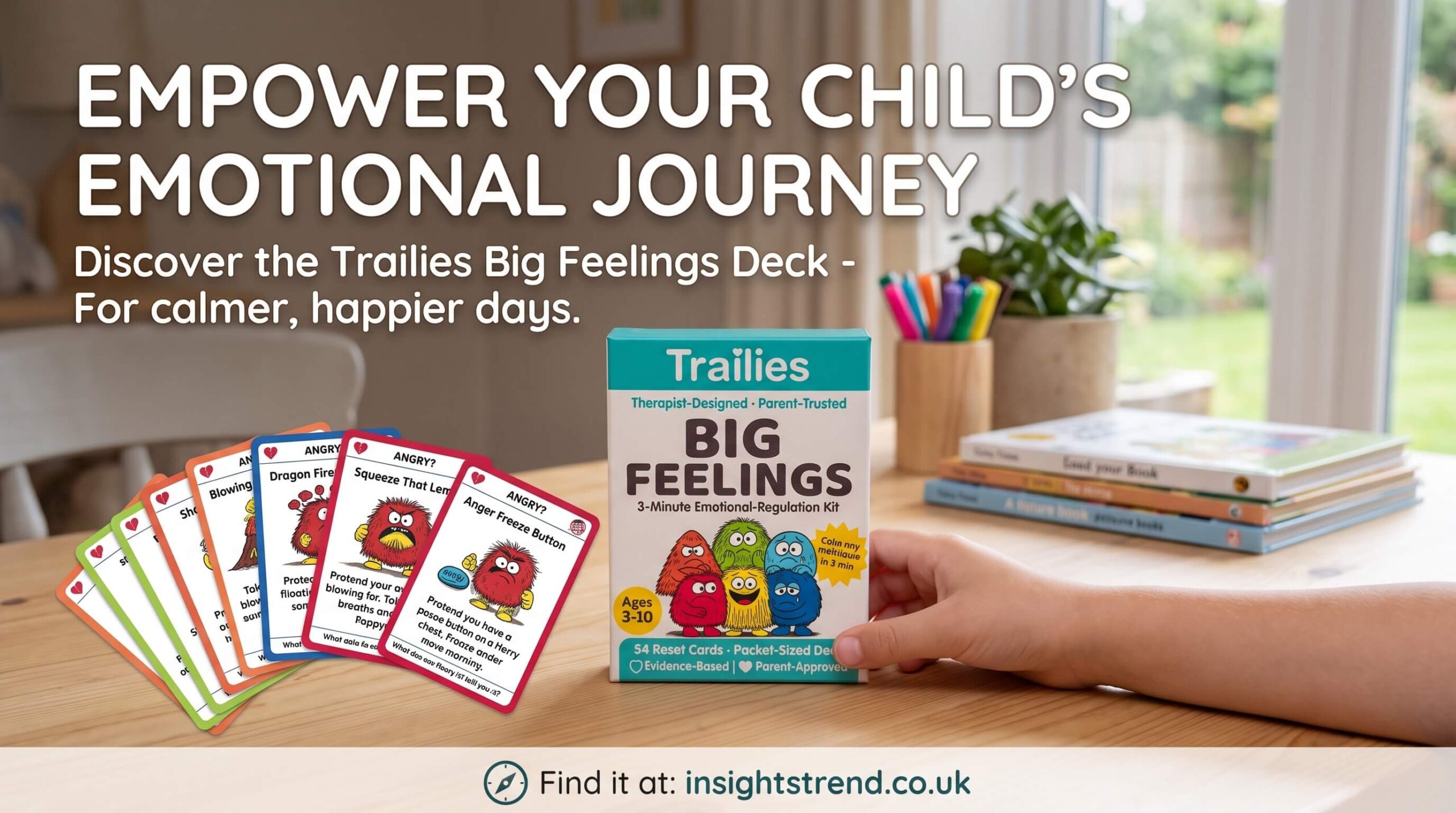
The trailies big feelings deck is a useful concept for anyone interested in helping children understand, identify, and communicate emotions in a more comfortable way. Big feelings can be difficult for children to explain, especially when they are experiencing frustration, worry, sadness, excitement, anger, or disappointment. A thoughtfully designed feelings deck can give children a simple visual and conversational tool for exploring what is happening inside them.
The trailies big feelings deck can also support parents, teachers, counselors, and caregivers who want to create more open conversations about emotional wellbeing. Rather than expecting a child to immediately explain complex emotions, a card-based activity can provide an accessible starting point. Children can look at an emotion, recognize something familiar, and gradually find the words they need.
In this guide, we will explore the purpose of the trailies big feelings deck, how emotional learning tools can be used effectively, and why discussing feelings can play an important role in childhood development.
What Is the Trailies Big Feelings Deck?
The trailies big feelings deck can be understood as an emotional learning resource designed to encourage conversations about feelings. The idea behind a feelings deck is straightforward: visual prompts and simple questions can make emotional topics easier to approach.
Children do not always have the vocabulary to describe what they feel. A child may know that something is wrong but struggle to explain whether they are anxious, disappointed, overwhelmed, lonely, or angry. The trailies big feelings deck offers a possible bridge between an internal emotional experience and verbal communication.
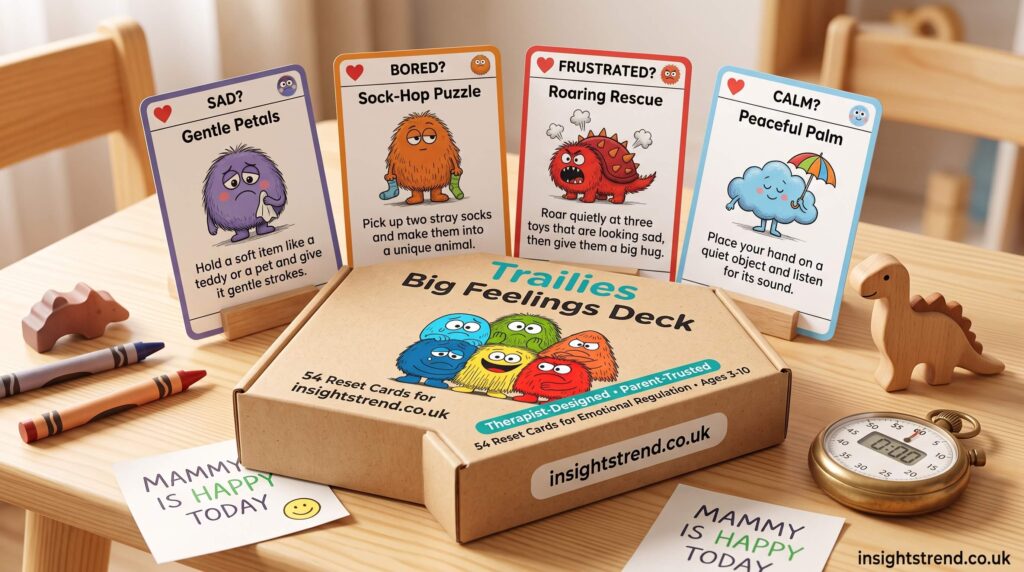
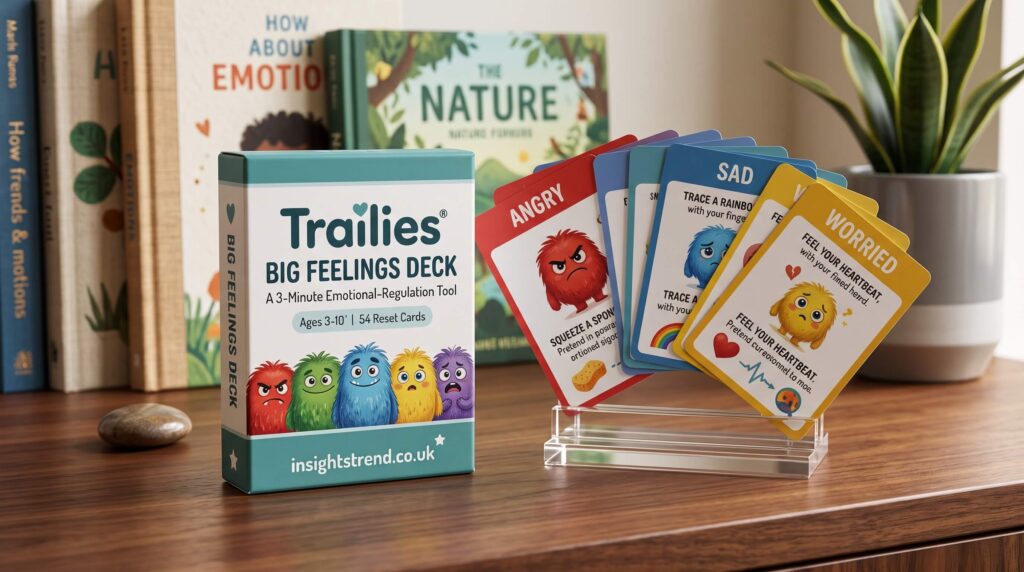
Depending on how it is designed and used, a feelings card deck may include emotion names, facial expressions, situations, reflective questions, or coping prompts. These elements can help children recognize emotional patterns and begin connecting feelings with experiences.
Why Talking About Big Feelings Matters
Emotional development is an important part of growing up. Children experience powerful emotions just as adults do, but they are still developing the skills needed to regulate and communicate those emotions.
Using a resource such as the trailies big feelings deck can create opportunities for children to talk about feelings before they become overwhelming. A calm conversation about an emotion may help a child recognize what they are experiencing and consider what they need.
This does not mean that every difficult emotion can be solved with a card or conversation. Instead, the trailies big feelings deck can serve as one tool within a broader approach to emotional education. Supportive relationships, age-appropriate communication, consistent routines, and professional guidance when needed all remain important.
Organizations such as UNICEF and Child Mind Institute provide educational resources that emphasize the importance of supporting children’s emotional and mental wellbeing.
How the Trailies Big Feelings Deck Can Support Emotional Vocabulary
One of the most valuable aspects of the trailies big feelings deck is the opportunity to build emotional vocabulary. When children learn more words for feelings, they may become better equipped to describe their experiences.
For example, a child who previously used the word “mad” for many situations might gradually learn to distinguish between irritation, frustration, disappointment, embarrassment, and anger. These distinctions can make conversations more precise and productive.
The trailies big feelings deck can encourage this process by presenting emotions in a way that feels approachable. Instead of asking a child a broad question such as “What’s wrong?”, an adult can use a card as a gentle prompt and ask, “Does this feeling seem familiar today?”
That small change in conversation can make emotional communication feel less demanding.
Using the Deck at Home
Parents and caregivers can introduce the trailies big feelings deck during relaxed moments rather than waiting until a child is already experiencing an emotional crisis. A quiet conversation after school, during bedtime, or during family time may provide a more comfortable setting.
The goal should be curiosity rather than interrogation. Children may not always want to talk, and respecting that boundary is important. A feelings activity should create an invitation to communicate, not pressure a child into sharing more than they are ready to discuss.
Parents can also participate themselves. When adults model healthy emotional language, children can see that having feelings is normal. Saying, “I felt frustrated today, so I took a short break,” can demonstrate that emotions can be acknowledged without allowing them to control behavior.
Using the Trailies Big Feelings Deck in Education
Teachers and school professionals may also find emotional learning resources helpful in classroom environments. The trailies big feelings deck could potentially be incorporated into age-appropriate discussions about empathy, friendship, conflict, transitions, and self-awareness.
A classroom conversation might focus on recognizing emotions in fictional situations rather than asking students to disclose personal experiences. This approach can help children learn emotional concepts while maintaining appropriate privacy.
The trailies big feelings deck may be particularly useful as a conversation starter when children have difficulty explaining social situations. Discussing how a character might feel can sometimes be easier than immediately discussing one’s own experiences.
For broader guidance on children’s social and emotional development, resources from Harvard Center on the Developing Child can provide valuable background information.
Making the Most of the Trailies Big Feelings Deck
The effectiveness of the trailies big feelings deck depends largely on how it is introduced. Adults should avoid treating emotional cards as a test with right or wrong answers. Feelings are personal, and two children can respond differently to the same situation.
It is also helpful to validate emotions without automatically approving every behavior associated with them. A child can be told that feeling angry is understandable while also learning that hitting or hurting someone is not an appropriate response.
The trailies big feelings deck can therefore become part of a broader conversation about emotional regulation. After identifying a feeling, an adult might explore what caused it, how the body feels, and what healthy response could help.
Over time, these conversations can help children connect emotional awareness with practical coping strategies.
Trailies Big Feelings Deck and Emotional Regulation
Recognizing an emotion is often only the first step. Children also need opportunities to learn how to manage strong emotional experiences. The trailies big feelings deck can potentially support this process by encouraging reflection before action.
For instance, a child may identify feeling overwhelmed and then discuss whether taking a quiet break, talking to a trusted adult, drawing, breathing slowly, or changing environments might help. The appropriate strategy will depend on the child’s age, personality, and circumstances.
The trailies big feelings deck should not be viewed as a replacement for professional support when a child is experiencing persistent or severe emotional difficulties. If concerns about behavior or wellbeing continue, parents and caregivers should consider speaking with a qualified pediatrician, psychologist, counselor, or other appropriate professional.
Who Can Benefit From a Feelings Deck?
The trailies big feelings deck may appeal to families looking for an accessible way to discuss emotions with children. It may also be relevant to educators, childcare professionals, counselors, and others who regularly support children’s emotional development.
Its greatest value is likely to come from flexible use. Some children may enjoy identifying emotions visually, while others may prefer storytelling or conversation. The best approach is the one that feels natural and respectful for the individual child.
A feelings deck can also help adults notice that emotional communication is an ongoing process. A child who cannot explain a feeling today may be able to discuss it tomorrow after having time to process the experience.
FAQs About the Trailies Big Feelings Deck
What is the Trailies Big Feelings Deck?
The trailies big feelings deck is an emotional learning concept centered on using prompts or cards to help children recognize, discuss, and understand different feelings.
Who can use the Trailies Big Feelings Deck?
The trailies big feelings deck may be useful for parents, caregivers, teachers, counselors, and other adults who support children’s emotional learning.
What age is the Trailies Big Feelings Deck for?
The appropriate age depends on the deck’s specific design and content. Adults should choose emotional learning materials that match the child’s developmental level and communication abilities.
Can the Trailies Big Feelings Deck help with emotional regulation?
The trailies big feelings deck may support emotional regulation by helping children identify feelings and discuss possible healthy responses. It should complement, not replace, professional support when needed.
How should parents use the Trailies Big Feelings Deck?
Parents can use the trailies big feelings deck during calm moments, allowing children to explore emotions without pressure. Open-ended questions and active listening can make the experience more meaningful.
Final Thoughts on the Trailies Big Feelings Deck
The trailies big feelings deck represents an approachable way to introduce conversations about emotions and emotional awareness. By giving children accessible prompts for identifying and discussing feelings, a resource of this kind can help make emotional conversations less intimidating.
The most important benefit of the trailies big feelings deck is not simply identifying an emotion. It is creating an environment where children feel safe expressing themselves, asking questions, and learning that difficult feelings are a normal part of life.
When combined with patient listening, supportive relationships, emotional vocabulary, and appropriate professional guidance when necessary, the trailies big feelings deck can be a useful addition to conversations about childhood wellbeing. The ultimate goal is to help children develop the confidence and language they need to understand their inner experiences and communicate with the people who care for them.
